
 0
0
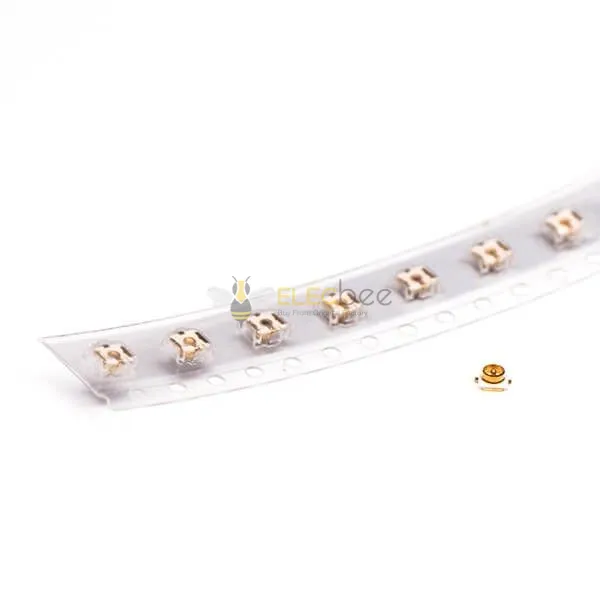
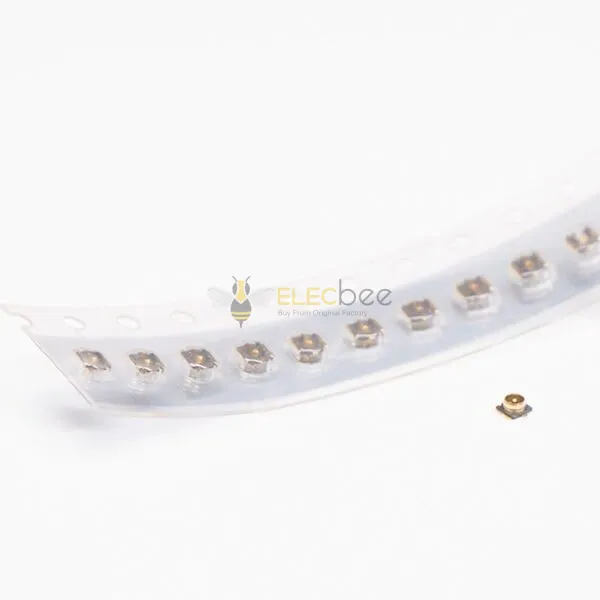
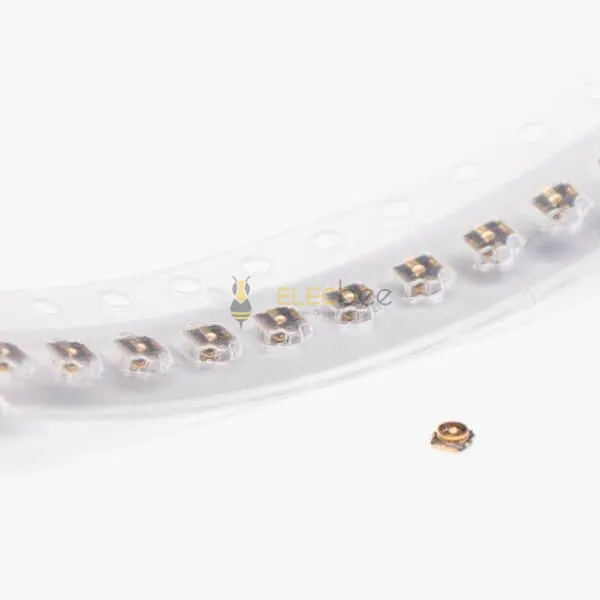
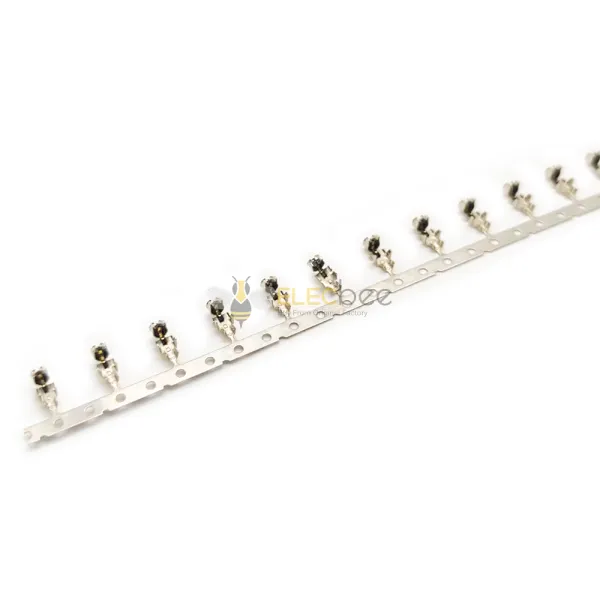
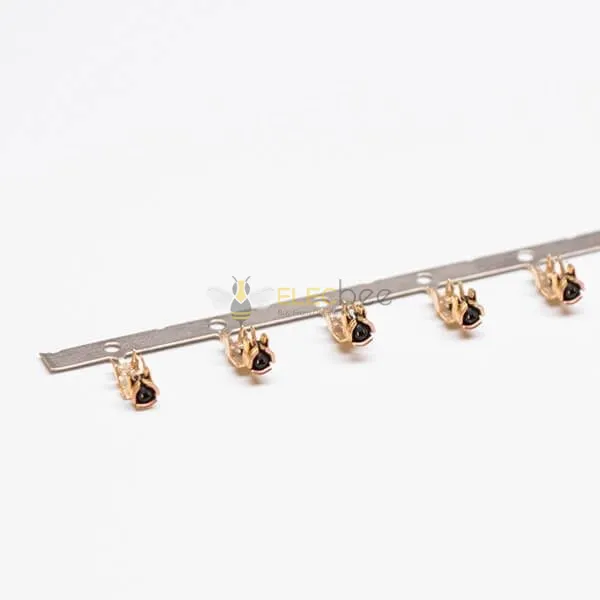
RF antenna connectors play a vital role in modern wireless communication and IoT devices.Especially in the limited space, how to choose the right Miniature RF Antenna Connector, become the equipment design and procurement links must be concerned about.This article will focus on the definition of the IPEX series (IPEX1 to IPEX5) connectors, generational differences, application recommendations, and a practical guide to selection to help electronics engineers, purchasers, OEMs, and DIY enthusiasts make informed decisions.
1.What are IPEX RF Connectors?
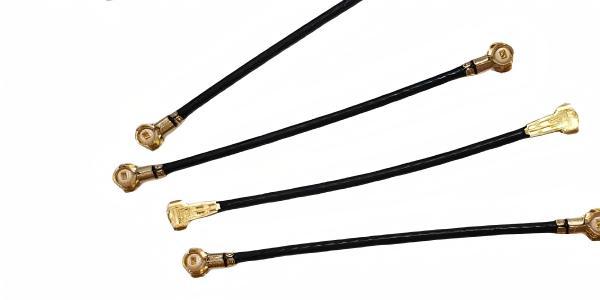
IPEX (also known as IPX) is a line of miniature RF coaxial connectors from Japanese electrical connector manufacturer I-PEX.It is also often referred to as U.FL or Hirose U.FL in the European and American markets, and the names are confusing as multiple manufacturers have similar products.
Features:
a.Extremely small size (typically less than 2mm in diameter)
b.Frequency support up to 6GHz or more
c.Low insertion and extraction life (typically 30~100 times)
d.Commonly used in Wi-Fi modules, 4G/5G modules, GPS antennas, Bluetooth modules and other compact wireless devices
2.Comparison of IPEX Connector Generations
|
Generation |
Compatibility |
Frequently used devices |
|
IPEX1(U.FL, IPX) |
compatible |
Wi-Fi modules, ESP32 |
|
IPEX2(MHF2) |
incompatible |
Height-constrained consumer electronics |
|
IPEX3(MHF3) |
incompatible |
tablets, automotive modules |
|
IPEX4(MHF4) |
incompatible |
High-frequency-demanding 5G terminals |
|
IPEX5(MHF5) |
incompatible |
Ultra-thin smart devices, miniature modules |
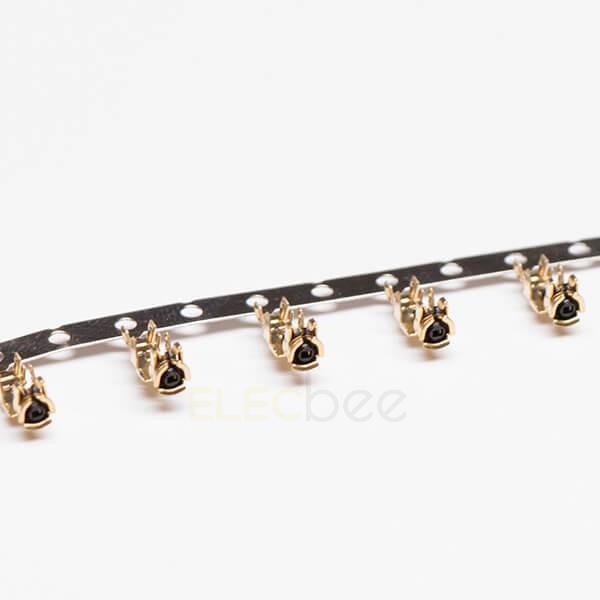
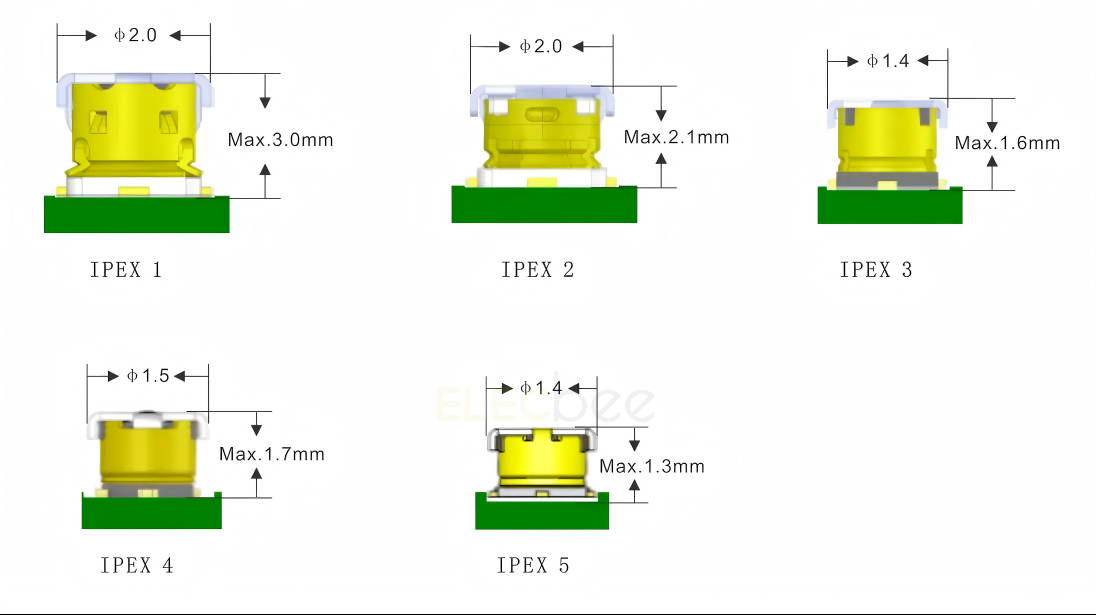
IPEX 1: terminal caliber: φ2.0, height <3.0mm;
IPEX 2: terminal caliber: φ2.0, height <2.1mm;
IPEX 3: terminal caliber: φ1.4, height <1.6mm;
IPEX 4: terminal caliber: φ1.5, height <1.7mm
IPEX 5: terminal caliber: φ1.4, height <1.3mm
3.Why is IPEX1 interchangeable with U.FL but not the other generations?
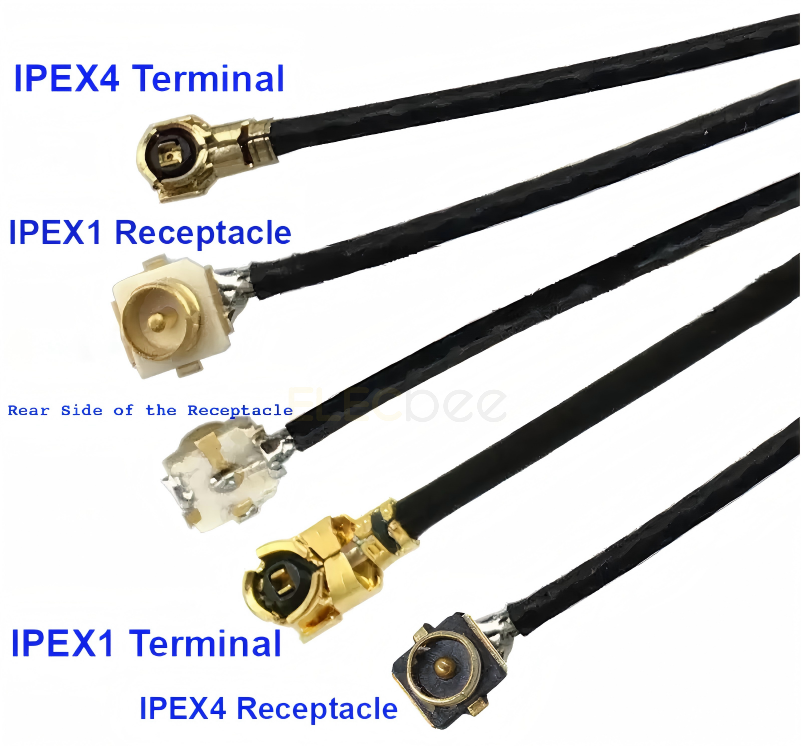
3.1. This is often confusing to purchasers.In fact, IPEX1 and Hirose U.FL are almost identical in terms of interface standards, and are highly compatible in terms of dimensions, electrical properties, and mechanical interfaces, with many module manufacturers labeling them “U.FL/IPEX1”. From IPEX2, the size has been further reduced, but the interface specifications have changed so that they cannot be used in common with earlier models.
3.2. Other generations of interfaces from the physical structure to adapt to the scene are completely different, forced to mix the light is poor contact, or direct damage to the device.If mismatched,e.g. using the MHF4 antenna to the IPEX1 socket, may result in poor contact or damage to the connector.
3.3. A maintenance platform has used a 50 times microscope to compare the two generations of interfaces, found that the 1 generation of terminal spacing up to 0.8mm and contacts were arranged in a ladder-like, 4 generation of terminal spacing compression to 0.5mm and the use of staggered layout, this micro-structural differences in the ordinary magnifying glass is difficult to detect, which directly leads to the mechanical structure of the completely incompatible.This sophisticated structural difference makes the two generations of interfaces completely physically incompatible, and a forced connection can lead to interface damage or even equipment failure.
4. Selection recommendations for different usage scenarios
4.1. Industrial Equipment & OEM Products
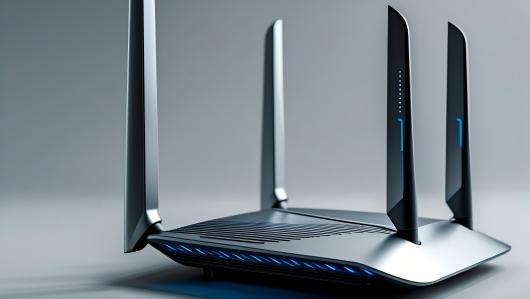
Recommended IPEX1 (U.FL):high stability, moderate cost, easy to replace.Suitable for wireless modules in routers, industrial gateways, and automation equipment for large-scale integration and maintenance.
4.2. Small Consumer Electronics
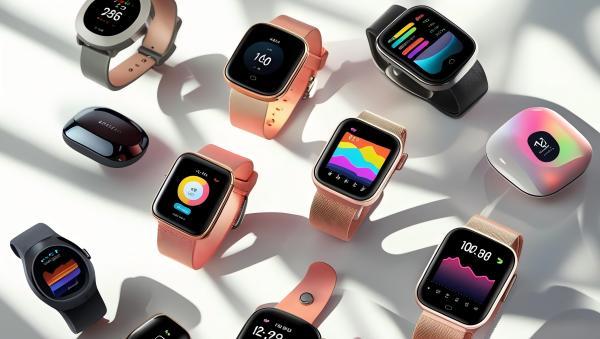
Recommended IPEX4 or IPEX5: Smaller connector size for highly space-sensitive application scenarios such as smartwatches, wireless headphones, and wearable health devices.
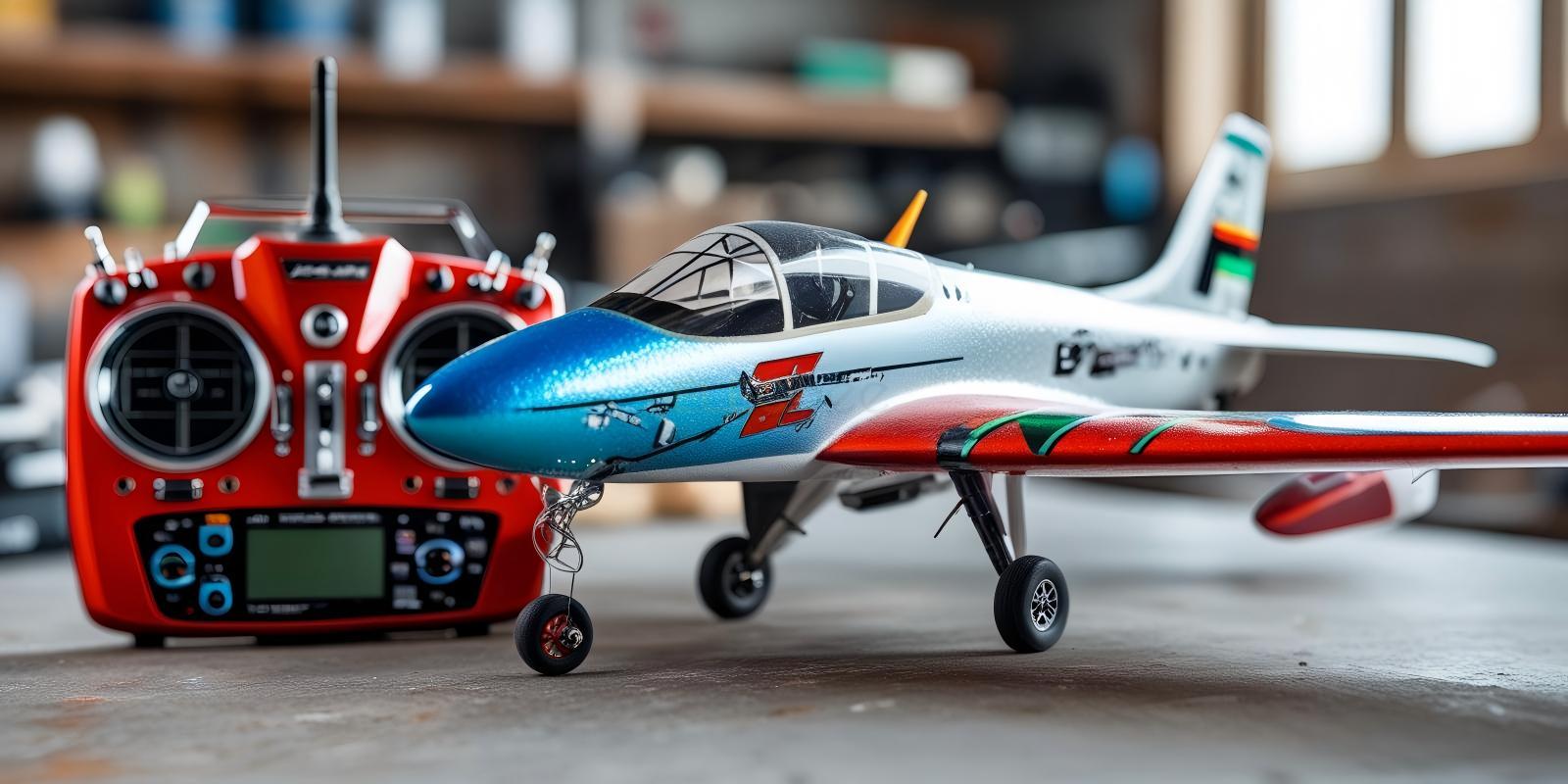
4.3. Model Airplanes and Remote Control Equipment
It is recommended to check the type of IPEX interface supported by the module or motherboard being used as a priority, and IPEX4 interface may be used for products of smaller size and structure in general.When selecting antenna components, make sure that the connector types are consistent to avoid loosening or poor contact.
4.4. DIY developers and Maker projects
Recommended to buy IPEX1 (U.FL) interface antenna and module: rich accessories, complete information, strong compatibility, is the most suitable for the beginning and rapid development of the interface type.
5.IPEX Installation and Usage Notes
The IPEX interface, as an ultra-compact RF connector, is easy to use, but due to its tiny size and precise structure, special attention should be paid to the following points during installation and use to ensure RF performance and mechanical reliability:
5.1. Confirm the interface type before installation
There are subtle differences in interface sizes between IPEX generations (especially between IPEX1 and IPEX4), and they cannot be mixed and matched.Before installation, be sure to confirm the interface model according to the specifications of the motherboard or module, and select the appropriate antenna and adapter cable.
It is recommended to use calipers for actual measurement or refer to the module datasheet to confirm the model number.
5.2. Insertion force and angle control
The IPEX connector should be plugged in by applying light, vertically centered pressure until a click is heard, indicating that it is firmly seated.Do not insert diagonally or pull hard to avoid damage to the connector center pin or base.
It is recommended to use ESD tweezers or finger nails to push gently to avoid improper tool gripping force.
5.3. Limited lifespan with multiple plugs and sockets
IPEX1 (U.FL) is standardized for 30-50 insertion/removal cycles, IPEX4/5 is even lower and belongs to the category of disposable connectors.
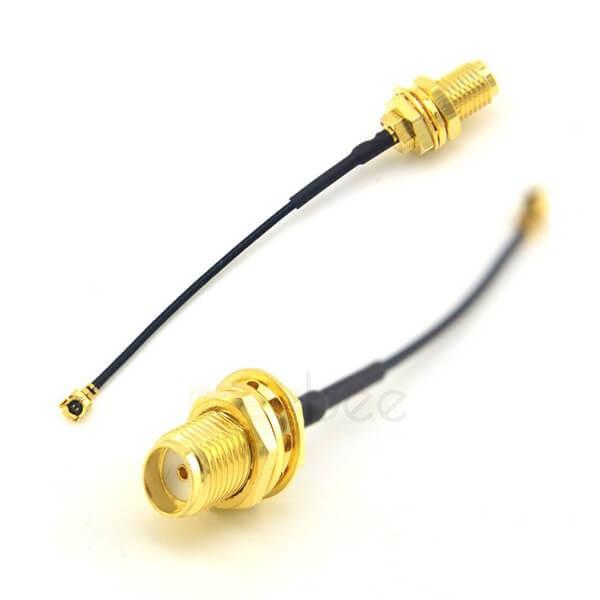
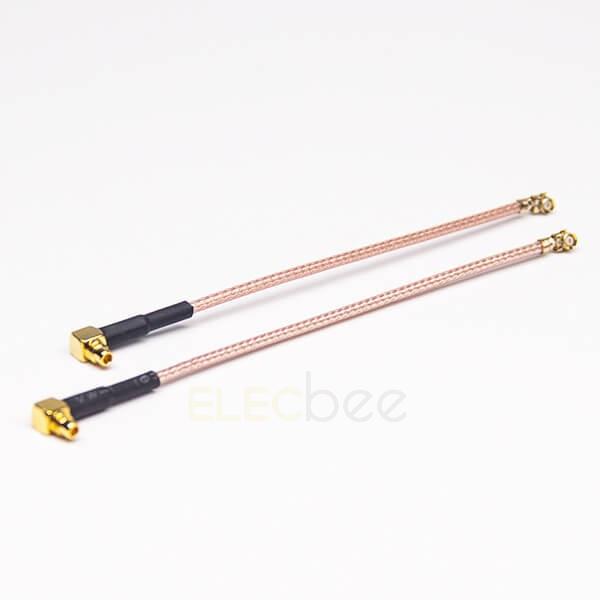
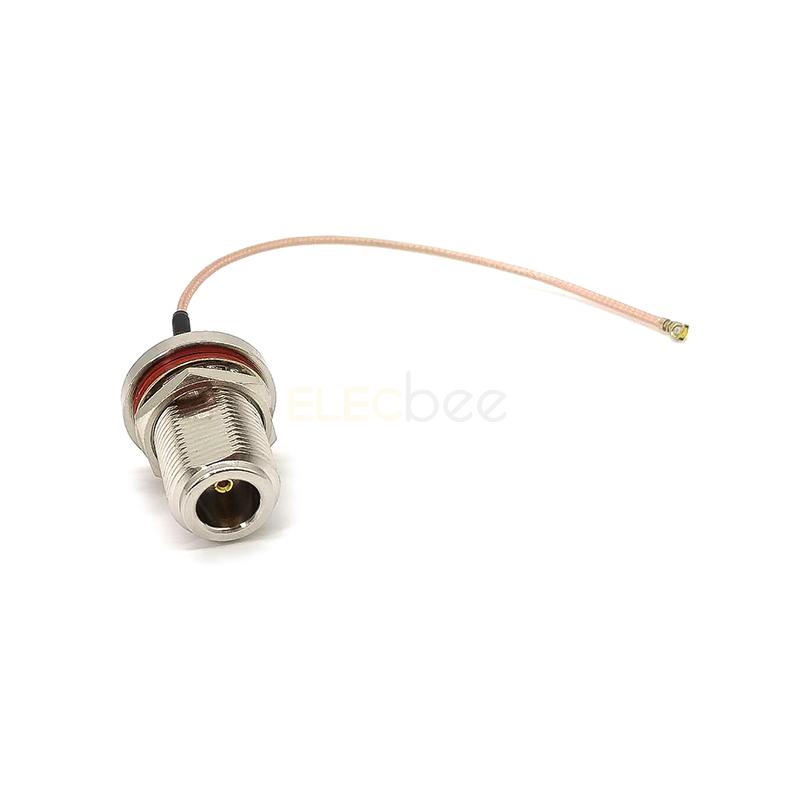
If the antenna is changed frequently during the R&D and testing phases, it is recommended to use IPEX extension cables to reduce the risk of wear and tear on the motherboard interface.
Recommended:
SMA to U.FL Extension Cable
5.4. Protection against tensile stress and vibration
The RF cable is thin and the connection is susceptible to external forces, so you should avoid the antenna cable hanging or being pulled.
Heat shrink tubing or adhesive dots can be used to secure the area around the connector to improve vibration resistance.
If used for outdoor or industrial equipment, it should be designed with protective cover or reinforced structure.
5.5.High-frequency performance with high buttress quality requirements
IPEX is part of the RF transmission path, and poor contact can cause problems such as signal attenuation, return loss, and RF leakage.
If a weak or unstable signal is found after installation, the connectors should be checked for good contact, damage or contamination.
5.6 Storage and protection
Unused antenna cables are recommended to be kept in an anti-static bag with a dust protection sleeve over the connector.
Avoid mixing with sharp metals and tools to prevent deformation of the center pin.
6.Recommended Cables and Connectivity Solutions
When selecting an antenna cable, make sure the plug matches the module socket.For example, the male connector of the IPEX1/U.FL is usually connected to the antenna cable and the female connector is soldered to the module.
Recommended:
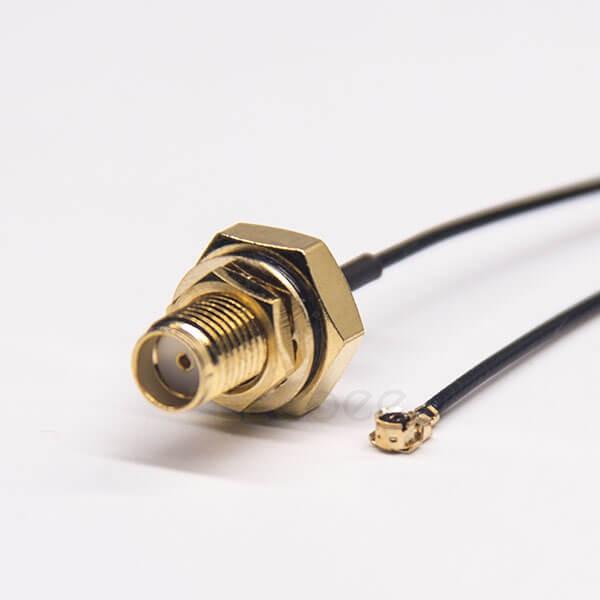
6.1. U.FL IPX to SMA Cable Antenna:Suitable for Wi-Fi signal enhancement of 2.4G wireless devices such as ESP32, smart home, security cameras, etc. for indoor omni-directional coverage scenarios.
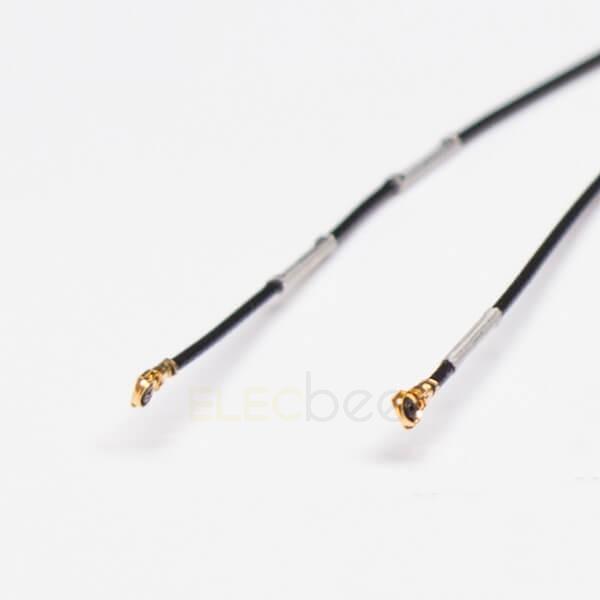
6.2. IPEX5 to IPEX5 RF Cable:Suitable for connecting RF signals inside compact devices such as cell phones, Wi-Fi modules, GPS, wireless storage, etc., ensuring low loss and high stability.
7.Future Trends: MHF6 and Smaller Connectors
With the development of 5G and Wi-Fi 7, the demand for high-frequency and high-bandwidth RF connectors is surging.I-PEX has introduced smaller MHF6 / IPEX6 interfaces supporting frequencies up to 12 GHz to fit into more compact equipment spaces.However, its cost and processing difficulty has also risen, suitable for high-end product selection.
8.Conclusion: Choose the right connector, take the road less traveled
Although RF connectors are small, choosing a wrong model may affect the stability and compatibility of the whole antenna system.This article describes in detail the differences and application scenarios of each generation of the IPEX series, hoping to help purchasers, engineers and DIY players to quickly select a model and take the wrong path.For bulk purchase of IPEX Connector, IPEX Cable Assemblies or IPEX Adapter, please visit Elecbee's one-stop platform for efficient selection and centralized purchasing.