
 0
0
1. What Are M8 and M12 Connectors?
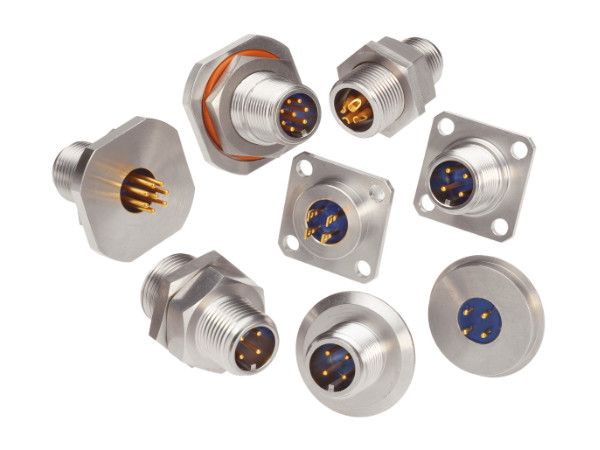
M8 and M12 connectors are among the most widely used circular connectors in industrial automation and sensor applications. Designed for reliable signal and power transmission, these connectors are known for their durability, compact design, and strong resistance to harsh environments.
Both connector types feature threaded locking mechanisms, ensuring secure connections even in vibration-prone industrial settings. However, despite their similarities, M8 and M12 connectors differ in size, pin configurations, and application scenarios.
2. M12 Connector Specifications and Features
2.1 Thread, Size, and Locking Mechanism
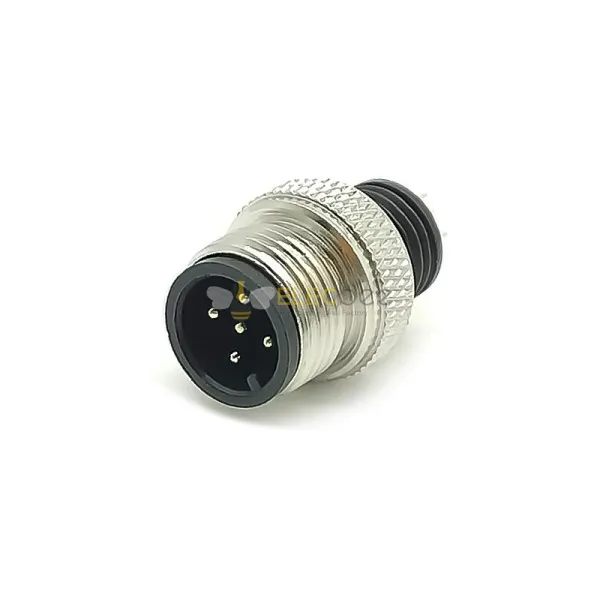
The M12 connector features an M12×1 thread and uses a screw-locking mechanism to ensure a stable and secure connection. Its robust design makes it suitable for demanding industrial environments.
With an IP67 protection rating, M12 connectors are dustproof and waterproof, allowing them to perform reliably in outdoor and harsh conditions.
2.2 Pin Configurations and Coding
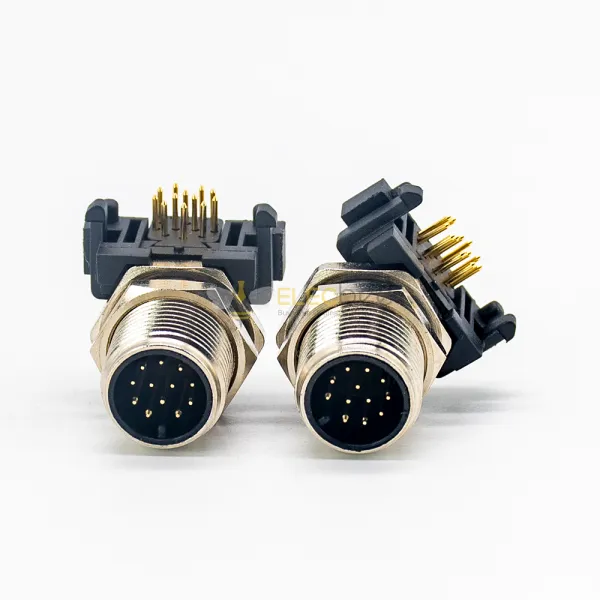
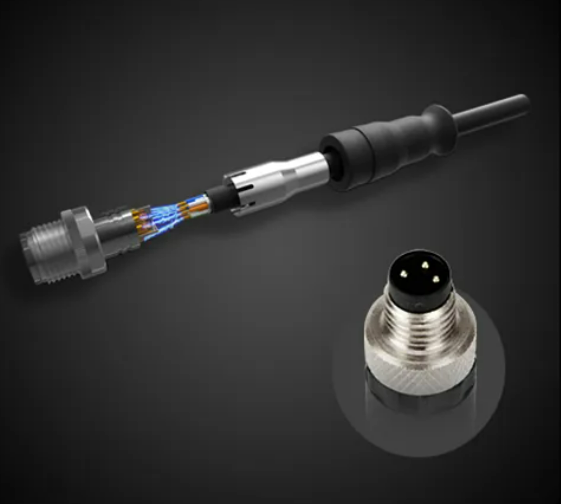
M12 connectors are available in multiple pin configurations, typically including 4-pin, 5-pin, and 8-pin versions. This flexibility allows them to support a wide range of signal and data transmission needs.
Depending on the application, different coding types (such as A-coded or D-coded) may also be used to prevent mismatching and ensure proper connections.
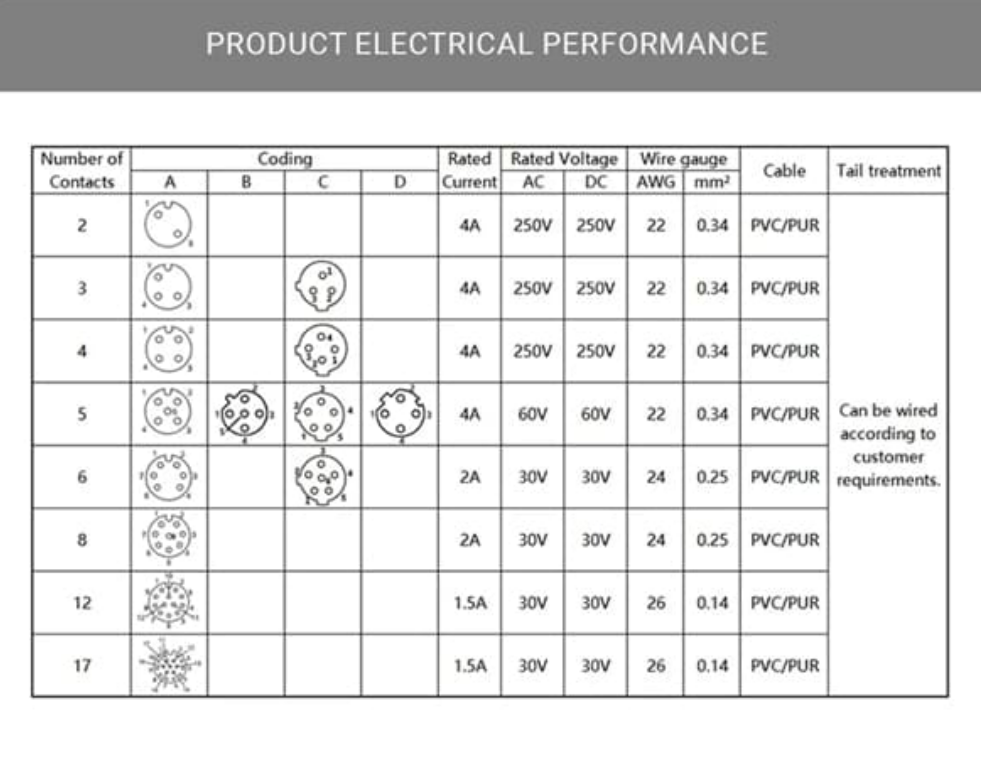
2.3 Cable Types and Shielding Options
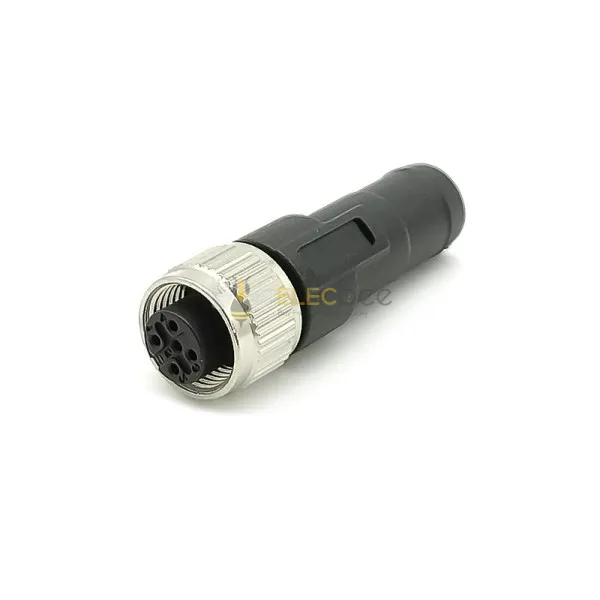
M12 connectors are available both with and without cables. Cable options include:
- PVC cables: suitable for general-purpose applications
- PUR cables: oil-resistant and ideal for industrial environments
Cable lengths can be customized to meet specific project requirements. Shielded versions are also available for applications requiring enhanced signal integrity.

3. M8 Connector Specifications and Features
3.1 Compact Design and Thread Type
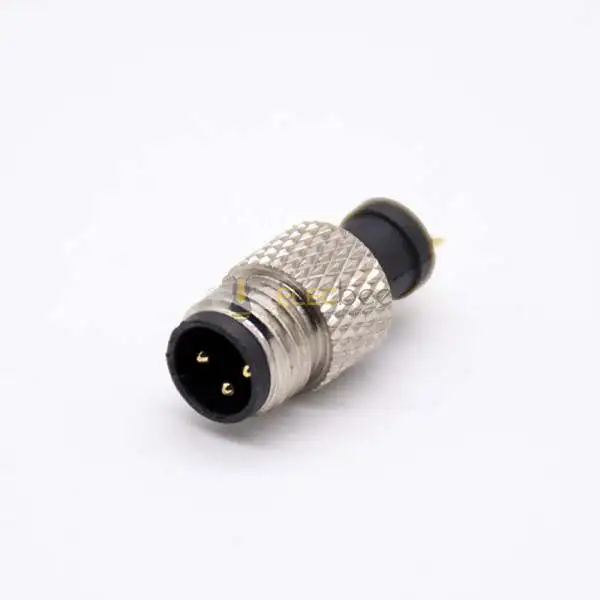
The M8 connector features an M8×1 thread and a screw-locking mechanism similar to the M12 connector. Its smaller size makes it ideal for applications where space is limited.
Like M12 connectors, M8 connectors typically offer IP67 protection, ensuring reliable performance in wet or dusty environments.
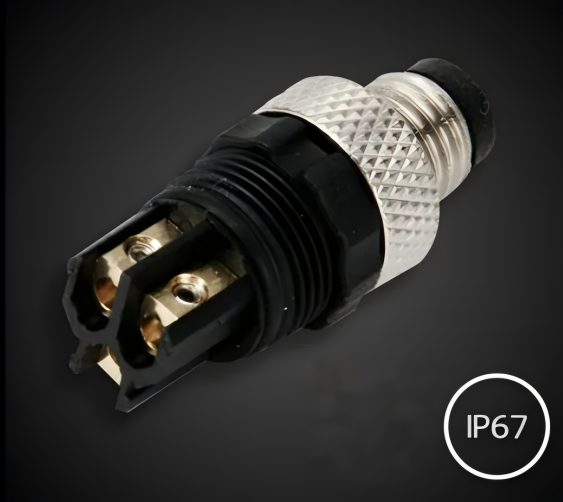
3.2 Pin Layout and Variants
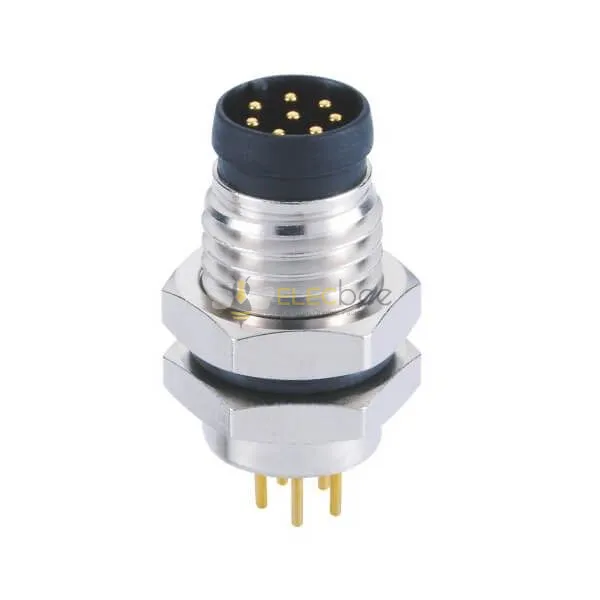
M8 connectors are commonly available in 3-pin and 4-pin configurations. Due to their compact size, they are typically used for simpler signal transmission requirements.
They are available in straight and angled (elbow) designs, with options for both cable-attached and panel-mount versions.
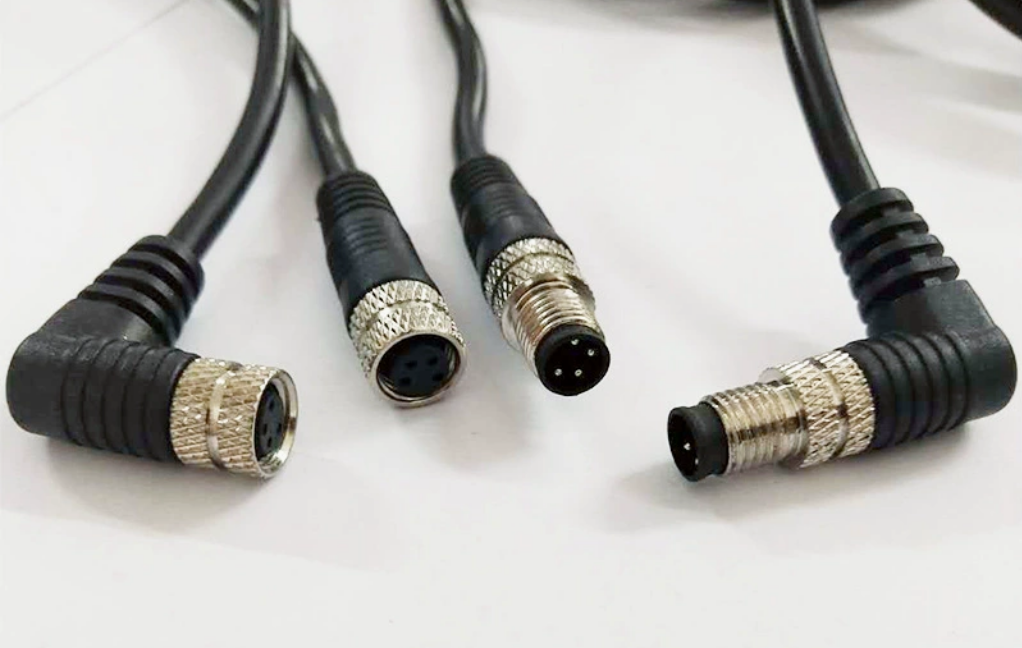
3.3 Cable Materials and Durability
M8 connector cables are typically available in:
- PVC material: for standard environments
- PUR material: for oil-resistant, wear-resistant industrial use
These connectors offer excellent waterproof performance and can be customized in length to fit various installation needs.
4. M8 vs M12 Connector: Key Differences
4.1 Size and Installation Space
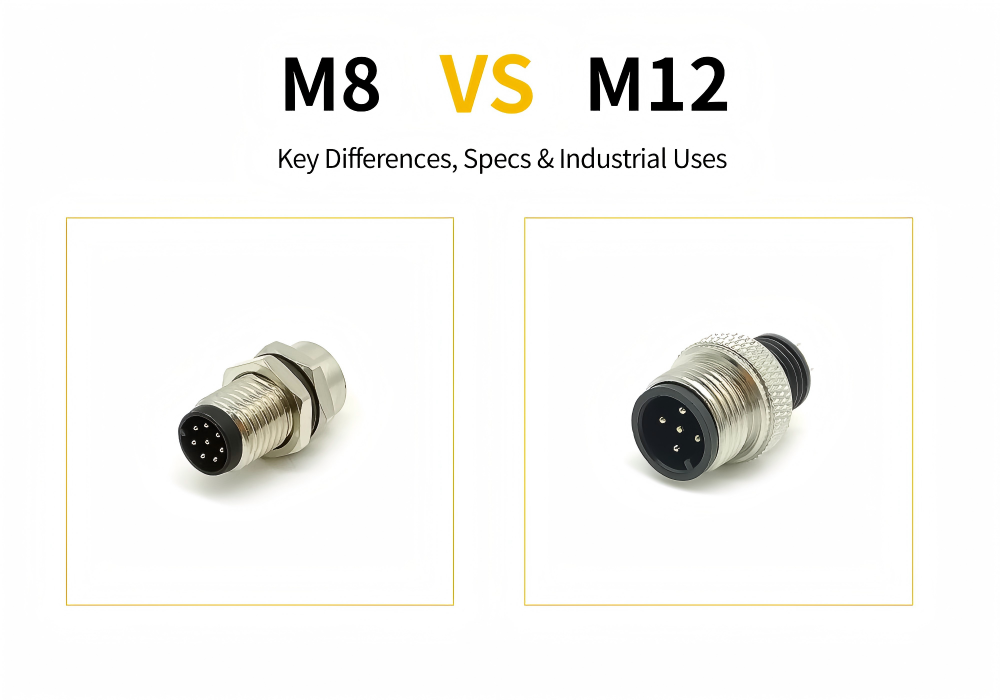
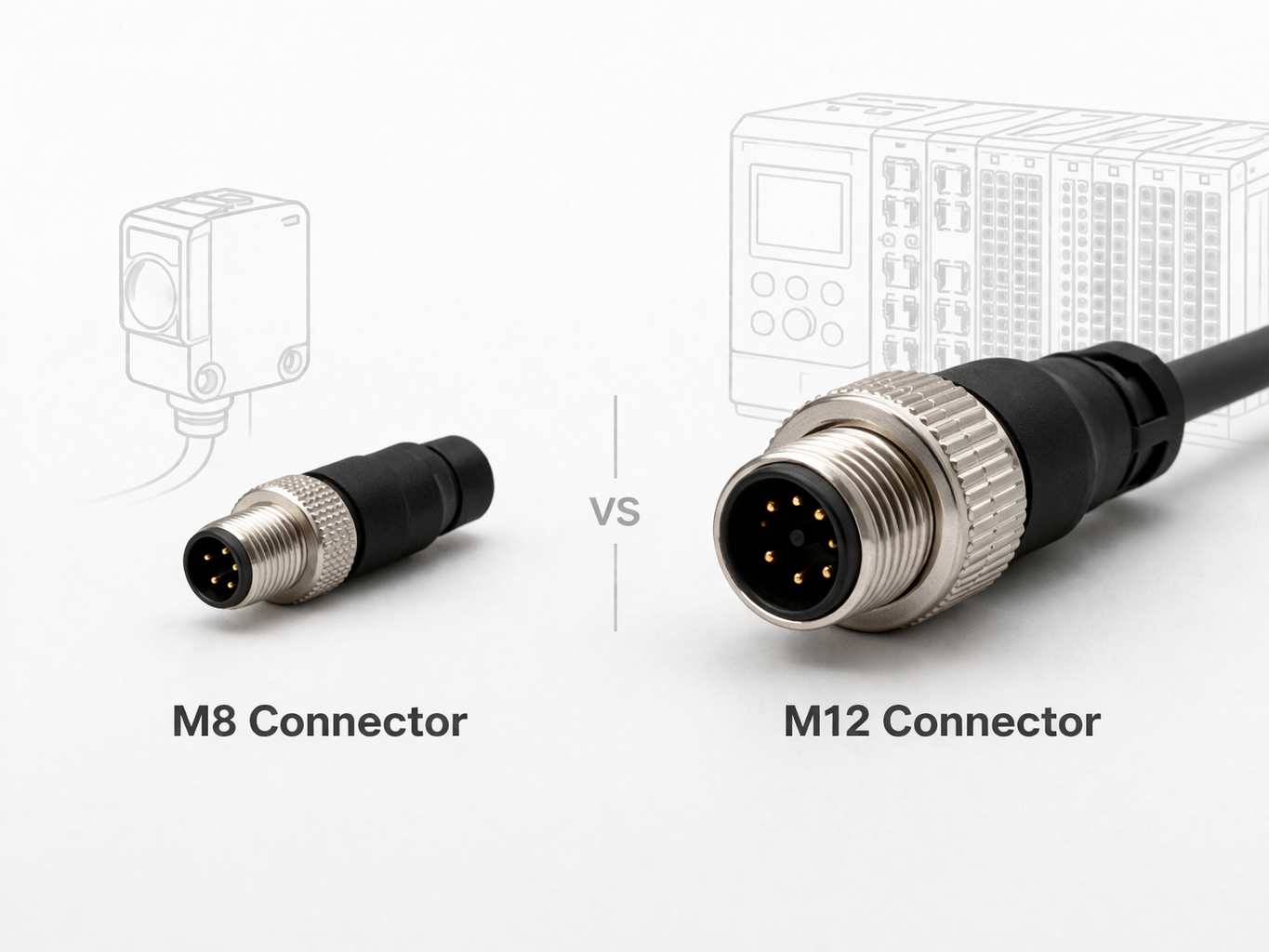
The most obvious difference between M8 and M12 connectors is size.
- M8 connectors are smaller and more compact, making them ideal for tight spaces and miniaturized devices.
- M12 connectors are larger and more robust, suitable for applications requiring higher durability.
4.2 Electrical Performance and Pin Count
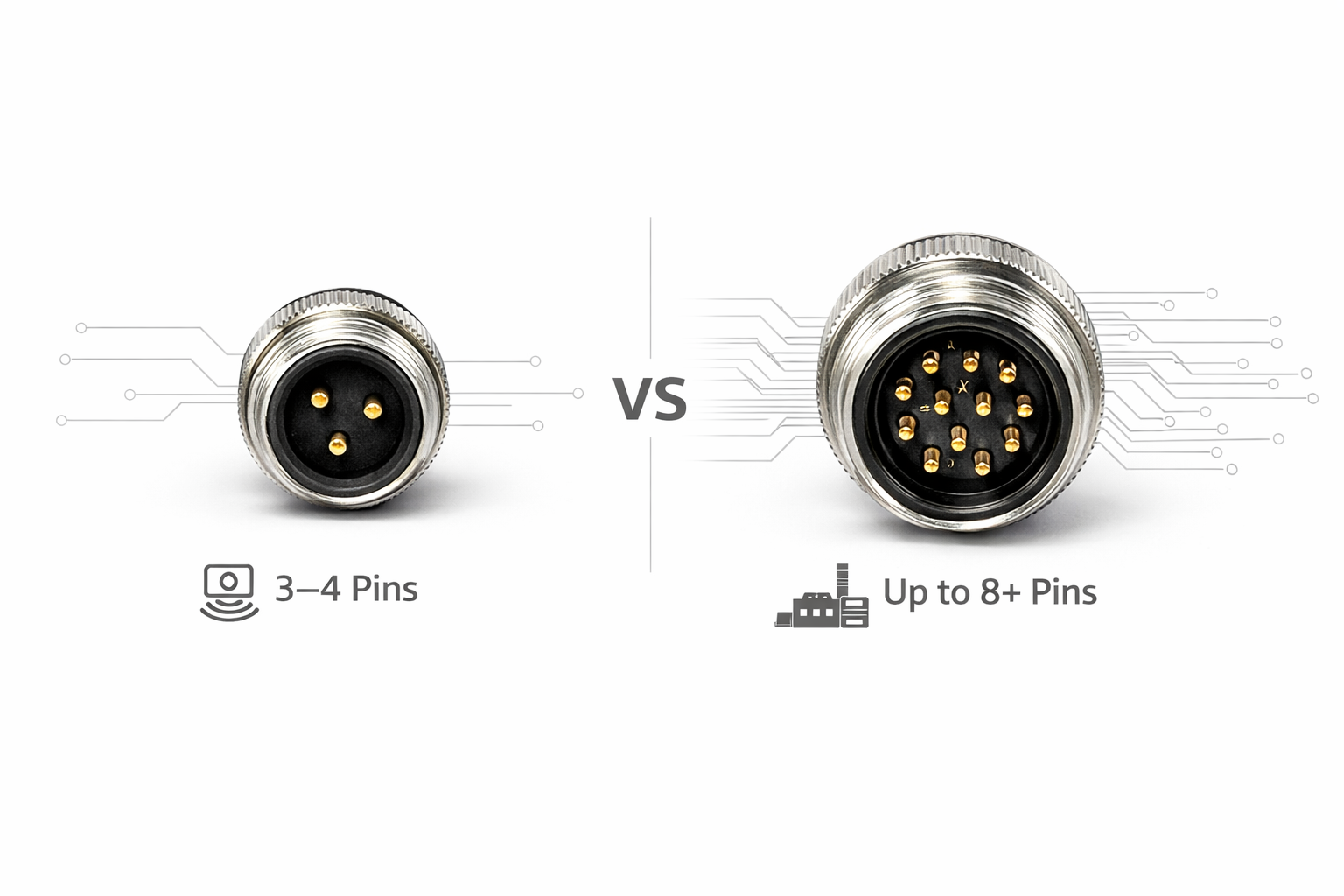
M12 connectors support more pin configurations (up to 8 pins or more), allowing them to handle more complex signal and data transmission.
M8 connectors, with fewer pins (typically 3 or 4), are better suited for simpler applications such as basic sensors.
4.3 Application Scenarios
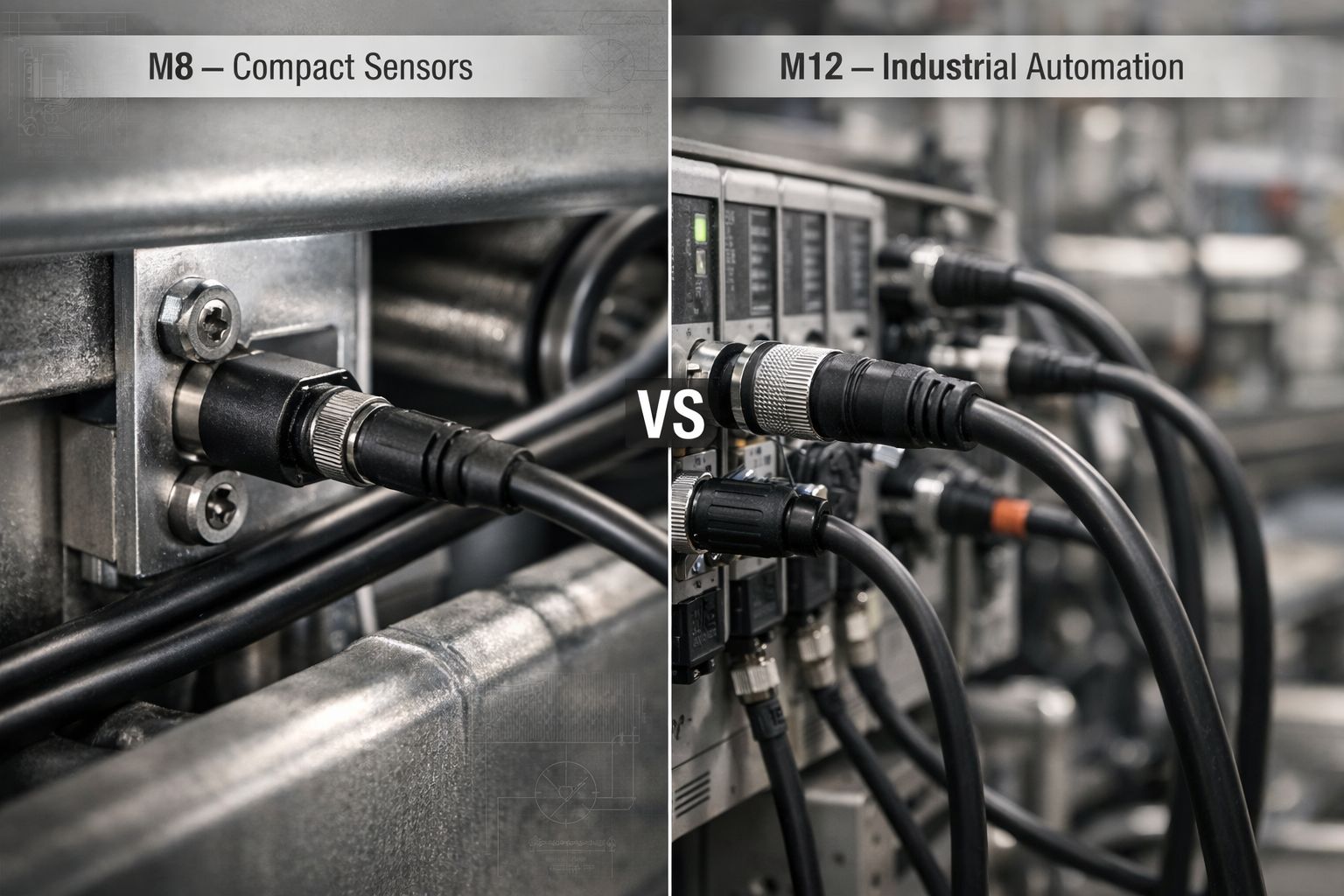
- M8 connectors are commonly used in compact sensors and limited-space installations
- M12 connectors are widely used in industrial automation, fieldbus systems, and heavy-duty environments
5. Common Advantages of M8 and M12 Connectors
Despite their differences, both M8 and M12 connectors share several important advantages:
- Simplified installation: easy integration into electronic systems
- Easy maintenance: quick replacement of faulty components
- Upgrade flexibility: supports system upgrades without redesign
- Design flexibility: enables modular system design for engineers
These benefits make them essential components in modern industrial systems.
6. Typical Applications in Industrial Automation
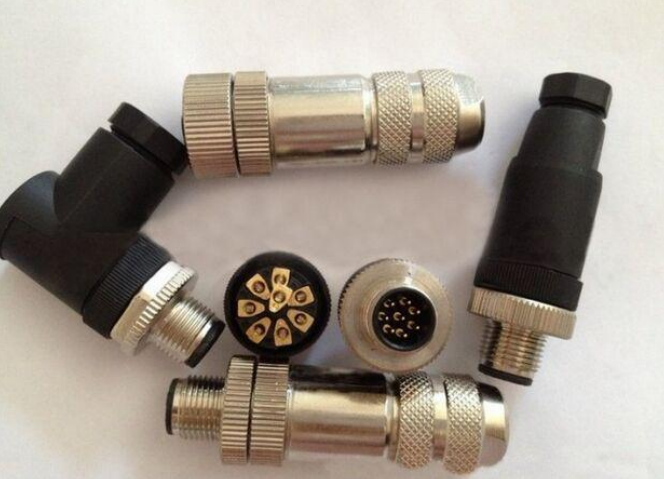
M8 and M12 connectors are widely used across various industries, including:
- Industrial automation systems
- Sensors and actuators
- Testing and measurement equipment
- Communication systems
- Automotive and transportation
- LED lighting systems
- Engineering machinery
- Control and transmission systems
Their rugged design and high reliability make them ideal for demanding industrial environments.

7. How to Choose Between M8 and M12 Connectors
Choosing between M8 and M12 connectors depends on your specific application requirements:
- Choose M8 connectors when space is limited and signal requirements are simple
- Choose M12 connectors when you need higher pin counts, stronger durability, and broader industrial compatibility
Additionally, consider factors such as cable material, shielding, environmental conditions, and installation requirements to ensure optimal performance.