
 0
0
What Is Insulation Resistance in Circular Connectors?
Insulation resistance refers to the resistance between conductive parts of a connector that are separated by insulating materials. It represents how well the insulation prevents leakage current from flowing across the surface or through the insulating material.
Insulation resistance is mainly affected by factors such as insulation materials, temperature, humidity, and surface contamination. The insulation resistance values provided in connector specifications are typically measured under standard atmospheric conditions.
However, under certain environmental conditions, such as high humidity or contamination, insulation resistance may decrease to varying degrees.
Common Test Voltages Used for Circular Connector Insulation
When testing the insulation resistance of circular connectors, common test voltages are typically 10 V, 100 V, or 500 V, depending on the connector design and testing standards.
These test voltages help determine whether the connector insulation can maintain sufficient resistance to prevent leakage current during operation.
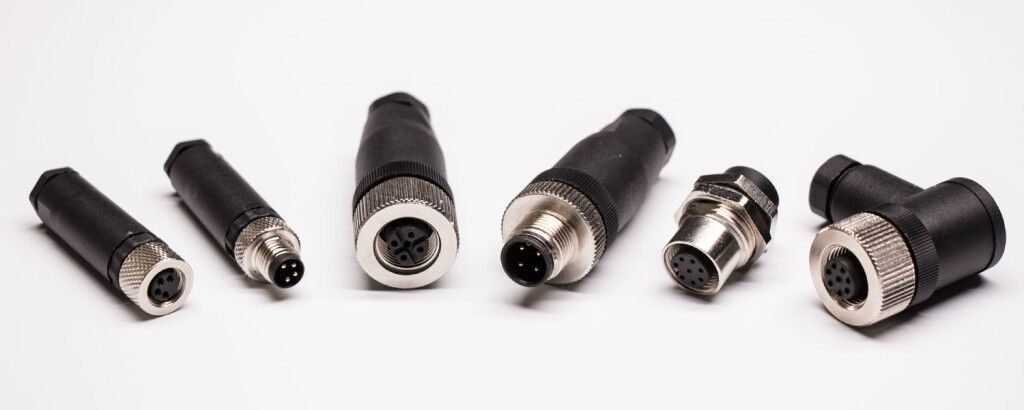
This article introduces several key parameters and performance characteristics of circular connectors.
Key Electrical Parameters of Circular Connectors
Withstand Voltage (Dielectric Strength)
Withstand voltage refers to the maximum voltage that can be applied between insulated parts of the contact pair or between the insulation and ground for a specified period without causing dielectric breakdown.
This parameter is influenced by factors such as:
-
contact spacing
-
creepage distance and geometry
-
insulation materials
-
ambient temperature and humidity
-
atmospheric pressure
Flammability
During operation, connectors carry electrical current and may generate heat, which can create potential fire hazards.
Therefore, connectors should be manufactured with flame-retardant and self-extinguishing insulation materials. These materials prevent ignition and allow the connector to extinguish quickly if exposed to flame.
Mechanical Parameters
Contact pressure is an important mechanical parameter that directly affects contact resistance and wear of the contact pair.
For circular pin-and-socket contacts, a standard test pin with a specified weight is often used to verify the contact's retention capability.
Typically, the diameter of the test pin corresponds to the lower limit of the contact diameter minus 5 μm. The total separation force is generally twice the sum of the individual contact retention forces.
Environmental Parameters
Environmental parameters include factors such as:
-
ambient temperature
-
humidity
-
temperature variations
-
atmospheric pressure
-
corrosive environments
These environmental conditions can significantly affect the performance of connectors during storage, transportation, and operation. Therefore, connectors should be selected according to the specific environmental requirements of the application.
How to Choose the Right Circular Connector for Your Application
Knowing the parameters of the circular connectors will help you better choose the right connector. Click here to read the next article, “M Series Sensor Connectors You Must Know,” where we continue exploring circular connectors. Stay tuned.